


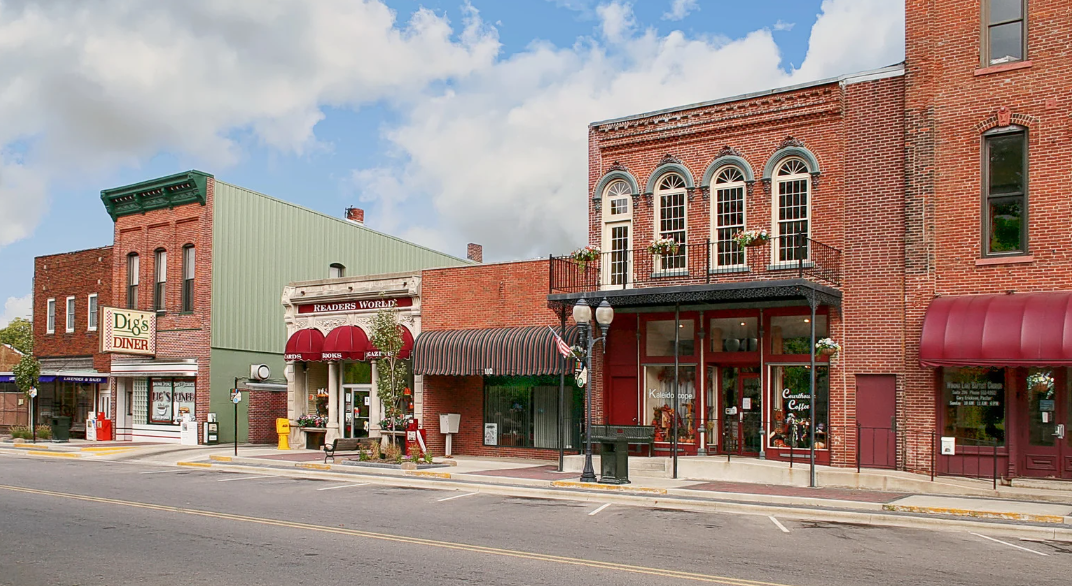
Rural cities, small cities, and Tribal Nations face a distinctive set of challenges in financing the infrastructure, housing, economic development, and resilience investments needed to sustain their communities. These challenges are not simply a matter of having too few available financing programs. Rather, they often reflect a fundamental mismatch between local fiscal capacity and the scale, timing, and complexity of the investments required.
A community may have a compelling project but lack the tax base to finance it, the resources to develop it to an investment-ready stage, the credit profile to borrow affordably, or the staff capacity to navigate the increasingly complex landscape of public, private, philanthropic, and impact capital.
A legacy of disinvestment
A constrained fiscal base is, often, at the center of a multi-year disinvestment pattern. Limited property and sales tax bases, declining populations, economic disinvestment, and other structural factors can constrain both sides of the municipal capital equation. Communities may struggle to sustain pay-as-you-go investment for capital needs, even where that approach would be fiscally prudent, while simultaneously lacking the fiscal capacity or credit quality to issue bonds, notes, or use other debt instruments to finance infrastructure whose costs and benefits appropriately extend across generations. In this environment, infrastructure can become an especially significant budgetary stressor because the community needs to invest precisely when its ability to generate the resources to do so is most constrained.
Climate risk and place-based vulnerabilities
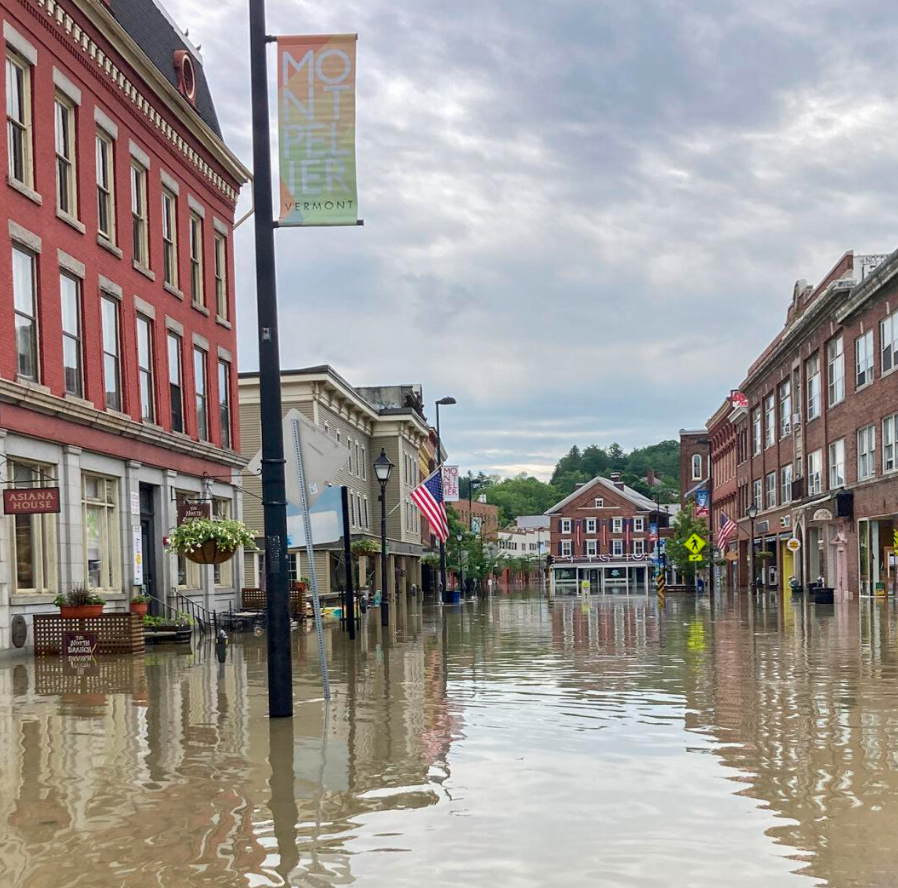
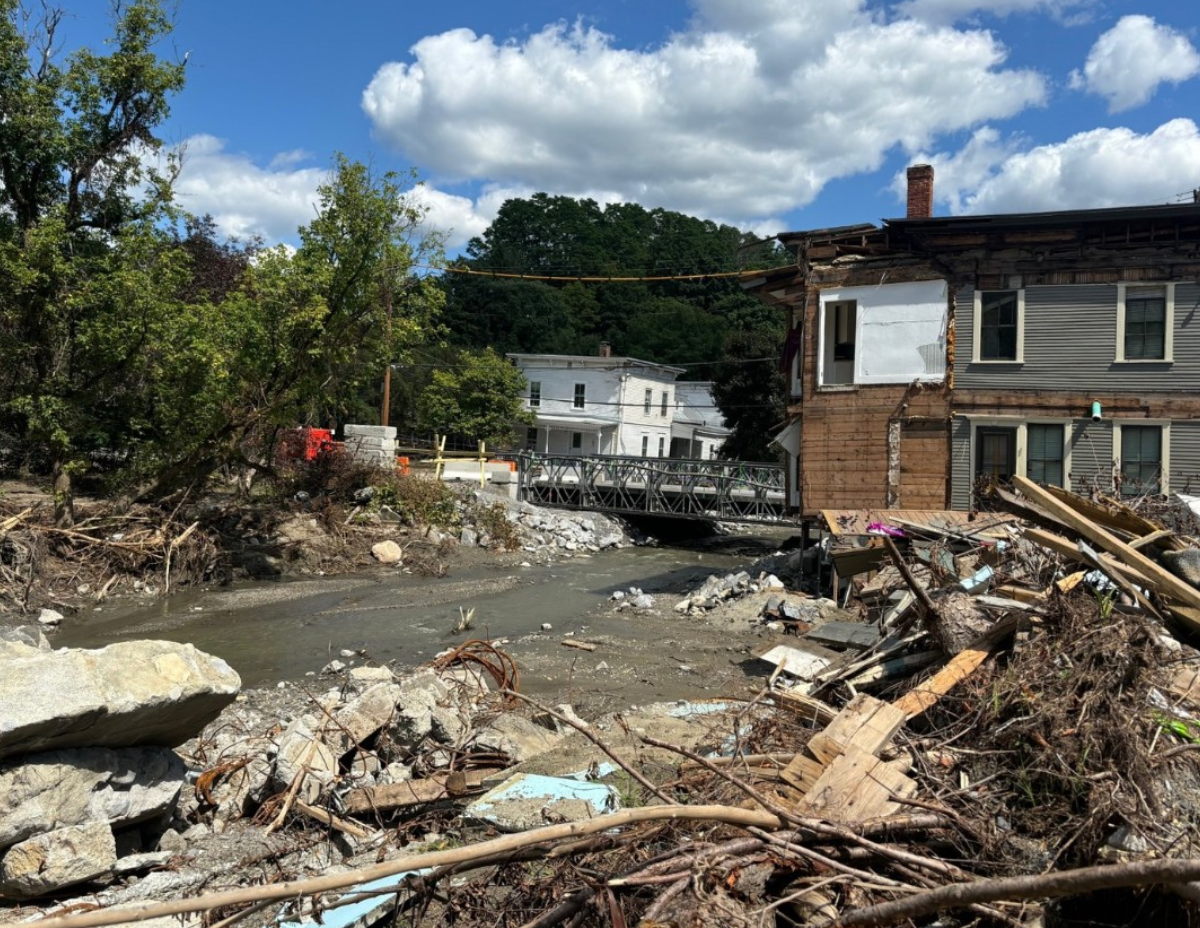
Climate risk and other unforeseen shocks compound these structural vulnerabilities. We have seen the devastating human consequences of climate-related events, but the fiscal consequences can be equally destabilizing for communities with limited reserves and narrow revenue bases. A flood, wildfire, severe storm, infrastructure failure, or other unexpected shock can simultaneously damage a community's physical assets, reduce its fiscal resources, and create an immediate need for reconstruction. Even when longer-term federal or state resources eventually become available, there can be a critical timing gap between the event and the arrival of those resources in the context of an unforeseen emergency. Governments that have limited experience accessing capital markets or using specialized financing vehicles may lack both the expertise and the relationships necessary to bridge that gap with outside investment.
The cost & affordability of capital
Public subsidies remain essential even when loan capital is available. For many rural and small-community projects, the fundamental challenge is not simply access to debt, rather it is affordability.
The expertise and access to resources to layer grants, forgivable loans, guarantees, interest-rate subsidies, or other forms of concessionary capital can make the difference between a project that is merely desirable and one that is financially feasible.
This is particularly important where communities are attempting to address legacy infrastructure needs, resilience, housing, or economic development in markets where the underlying revenue base is insufficient to support conventional financing on a pay-as-you-go basis.
The importance of the community investment ecosystem
The same dynamic applies to projects that are essential to local economic development but fall outside traditional public financing programs. A food-processing or agricultural packing facility, a grocery store, a clinic, for example, may be important economic engines or serve important social purposes for a community but may not qualify for public funding that is available for a municipal government project because they are not publicly owned assets.
Similarly, a homeowner seeking financing for energy efficiency improvements or a septic-system replacement may have a critical need but no obvious pathway to a state or municipal lending program. These projects often depend on CDFIs, community lenders, impact investors, real estate developers, New Markets Tax Credits, and may need high-capacity intermediaries to assemble the capital stack necessary to move forward. In this sense, the health of the local economy depends on an ecosystem of capital providers that extends well beyond the government's own balance sheet and what public finance can provide.
The role of pre-development capital
Pre-development capital is often an important resource, particularly for new projects. Communities often need funding for feasibility studies, engineering, environmental assessments, planning, design, legal work, and other activities that occur in the predevelopment phase before a project can qualify for construction financing or a public grant. Yet, often, these are precisely the resources that can be hardest to find on capital efficient terms. A community may have a compelling infrastructure or economic-development concept but lack the relatively modest amount of upfront capital required to turn that concept into a financeable project. Without that early investment, projects can remain perpetually “unfunded” even when substantial capital is theoretically available downstream.
The challenge of capacity
Capacity is as important as capital. Small and rural governments, as well as Tribal Nations may have only a handful of staff responsible for finance, infrastructure, planning, grants, and economic development. Core practices such as capital improvement planning, asset management, revenue forecasting, project development, and financial modeling can become difficult to sustain alongside day-to-day responsibilities.
Some communities benefit from regional planning commissions, councils of governments, state agencies, or other networks that can supplement local expertise but access to these resources varies considerably. Limited capacity can create a circular problem: communities need expertise to develop fundable projects but lack the resources to obtain that expertise until a project is already sufficiently developed to attract funding.
The power of Intermediaries
States and mission-driven intermediaries can play a critical role in closing these gaps. State infrastructure banks, bond banks, green banks, housing finance agencies, CDFIs, and other intermediaries can aggregate demand, take an active role in capital stack development, or provide technical assistance, improve credit access, and offer a lower-cost path to capital than a small jurisdiction might achieve independently. State intercept programs and other credit enhancements can similarly improve the borrowing capacity of communities that might otherwise struggle to access the market. But these institutions themselves are unevenly resourced, and eligibility requirements may exclude some of the communities with the greatest needs. Sustained appropriations and capitalization of these intermediary institutions can therefore be an important part of the broader rural and small-community investment strategy.
The challenges become even more acute in places experiencing deep or prolonged disinvestment. Deferred maintenance can accumulate until routine capital needs become major reconstruction costs. Declining populations can further erode the fiscal base, while shrinking economies can reduce employment, property values, and local revenues. Reversing these dynamics cannot necessarily be accomplished through a single infrastructure project or financing transaction. It may require a long-term, coordinated economic-development strategy that invests not only in physical infrastructure but also in the operating capacity, institutions, businesses, housing, workforce, and community assets needed to rebuild a local economic base.
The power of cross-jurisdictional strategies
The most consequential investments do not conform to municipal boundaries. Water systems, transportation networks, housing markets, energy infrastructure, watersheds, agricultural economies, and labor markets frequently span multiple jurisdictions. Regional and statewide strategies can therefore be essential to achieving sufficient scale and coordinating investment. Yet the communities with the greatest need may have the fewest resources to engage regional partners or participate in complex multi-jurisdictional initiatives. Building the capacity for that coordination is itself an investment.
Taken together, these challenges suggest that addressing historic patterns of deep disinvestment does not turn on asking only: how do we get more capital to rural and small communities and Tribal Nations? Shifting patterns also requires answering a more fundamental question that interrogates how we build the capital and institutional infrastructure that enables these communities to access, layer, and deploy capital effectively over time?
Addressing these questions requires a broader ecosystem and view of how resources flow into a place, including one that combines grants and subsidies with affordable debt, credit enhancement, pre-development financing, impact capital, technical assistance, and stronger state and regional intermediaries. It also requires recognizing that capital access and local capacity are mutually reinforcing. Communities need capacity to access capital, but sustained investment can also build the capacity needed to create the next generation of viable projects and invest in the people to sustain the work.
Acknowledgements & Disclaimer
This resource was created for educational purposes only aspart of the Rural & Small Cities Program, with the support of the Robert Wood Johnson Foundation. The views and perspectives presented in this resource are those of the authors and the Public Finance Institute team.